Latest news and interesting articles
We invite you to browse through our news pages to catch up with the latest news about crossXculture as well as related issues from around the globe.
Nov 28, 2026
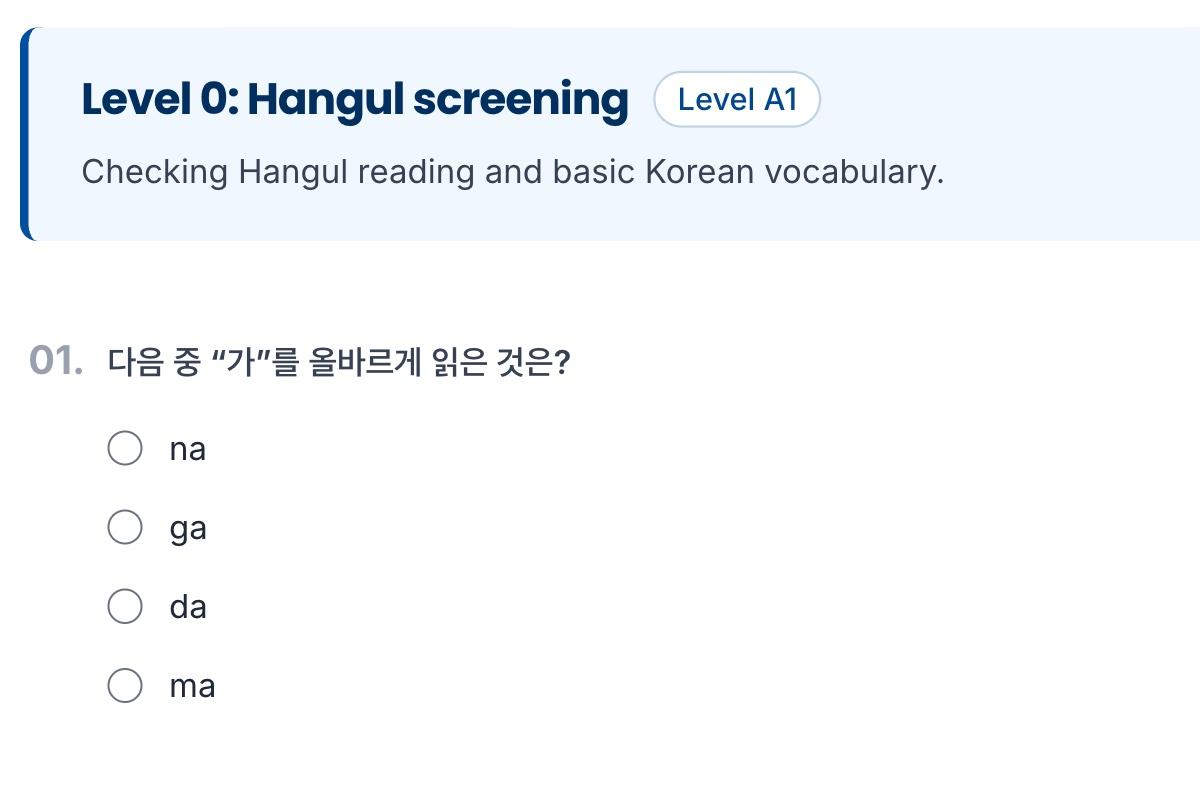
New Placement Test for Korean
I am pleased to announce that crossXculture now offers a placement test for the Korean language to help us assess learners from levels A1.1 to B2.2.
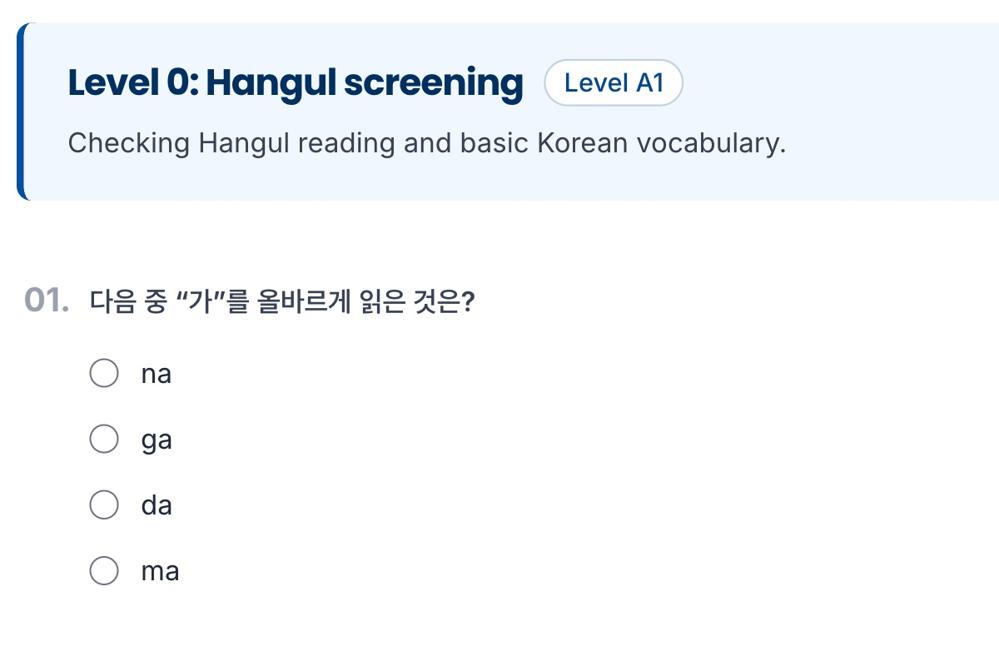
I am pleased to announce that crossXculture now offers a placement test for the Korean language to help us assess learners from levels A1.1 to B2.2. Test results are automatically evaluated against the European Framework of Reference for Foreign Language Learning.
The testing format is based on our well-established “Fit-for-Business” model of 80 questions and was co-developed with Sanghyuk Moon, one of the Korean language specialists from crossXculture who has experience as a language trainer, translator, and interpreter. Sanghyuk and I are the joint copyright holders of this test.
For many European learners of Korean as a foreign language, the 24 letters (14 consonants and 10 vowels) of the Hangul alphabet would be challenging enough. We have therefore removed our former requirement for learners to complete all 80 questions at once.
We also redesigned all our language tests into 20-question segments, allowing test takers to submit their test early when they feel they have reached their limit. In terms of exactness of evaluation, the early opt-out method is more accurate than guessing the remaining answers.
We hope you will enjoy testing your Korean language skills with us. You are not alone in your desire to learn this language. An increasing number of Europeans are now studying Korean due to their professional ties with the country, and crossXculture is fortunate to have excellent resources and facilities for learners of Korean.
Fun facts: The Korean language is spoken by up to 80 million people worldwide (roughly the equivalent of the German population), and it is the official language of both North and South Korea. It is classified as a language isolate and uses a subject-object-predicate (S-O-P) sentence structure.
The Hangul alphabet dates back to 1443, when it was introduced by King Sejong the Great with the aim of increasing literacy among a population that still relied on Classical Chinese characters, known as Hanja, at the time. Today, around 55% of Korean vocabulary has Chinese origins (Sino-Korean), it includes many loanwords from English and other languages.
Perhaps you have already noticed: crossXculture is all about support, cooperation and networking. Our unique school philosophy demonstrates that the spirit of humans providing for each other is stronger and more enduring than the energy of exploitation. If you agree, join us on this journey. Shoulder to shoulder and step by step.
Thank you for your attention.
Warm regards,
Karsten Hein
Owner, Director of Studies
crossXculture.com
Good news for you.